
October 15, 2026
Fastener Manufacturer Trends in Standards and Supply Resilience
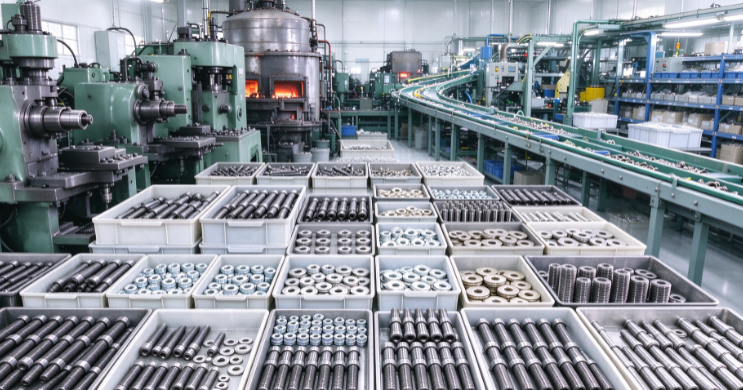
The fastener market looks simple until a production line needs one exact part, in one exact finish, with records that stand up to an audit. A modern Fastener Manufacturer is being judged on more than capacity. Buyers want clear standards, batch traceability, stable lead times, and a sensible response when steel prices, logistics, or design revisions move quickly.
Zhongchun Machinery is the company name used here. The wider industry issue is familiar to purchasing teams: a low quote can become expensive when a thread does not fit, a certificate cannot be traced to the lot, or a replacement source cannot reproduce the first sample.
Table of Contents
1. Why Standards Are Moving Up the Buying Checklist
2. Traceability Is Becoming a Commercial Requirement
3. Supply Resilience Starts With a Better Specification
4. Managing Steel, Coating, and Logistics Risk
5. What Responsible Supplier Qualification Looks Like
6. Preparing for Design Changes and Second Sources
8. A More Useful Supplier Conversation
Why Standards Are Moving Up the Buying Checklist
Fasteners connect parts that may see tension, shear, vibration, temperature changes, and repeated assembly. A standard gives engineering, quality, and purchasing teams a shared baseline for dimensions, material, property class, testing, or coating. It does not remove the need for application engineering, but it reduces ambiguity.
ISO 898-1 is widely used for metric bolts, screws, and studs made from carbon steel and alloy steel. It defines mechanical and physical properties by property class. The practical takeaway is that “high strength” is not a complete specification. The class, size range, thread, material condition, and test method must be stated together.
For aircraft maintenance, the FAA AC 43.13-1B handbook is a long-standing reference for acceptable methods, techniques, and practices. Its hardware guidance shows why fit, locking method, corrosion protection, and installation discipline matter. This is not a customer case for Zhongchun Machinery; it is an industry example of standards being used to control real maintenance risk.
Traceability Is Becoming a Commercial Requirement
Traceability used to be treated as a quality department concern. Today it affects purchasing, field service, and finance. When a customer reports a suspect lot, the supplier needs to identify raw material, process route, heat treatment, finish, inspection results, and shipment quickly. Without that chain, everyone argues from memory.
A useful lot record links the purchase order and drawing revision to a heat number, production date, machine or line, inspection results, packing label, and certificate. Digital systems can make the search faster, but the basic discipline is still physical: labels must stay with the parts, and nonconforming product must be separated before packing.
Buying model | Documentation depth | Response to a quality issue | Suitable use |
Price-only sourcing | Basic invoice and generic certificate | Broad containment and manual investigation | Low-risk, non-critical hardware |
Standard qualified sourcing | Drawing, lot certificate, inspection plan | Lot-level review with defined contacts | Repeat industrial assemblies |
Risk-based sourcing | Full traceability, process records, validation data | Targeted containment and corrective action | Safety, aerospace, energy, regulated work |
Dual-source program | Two qualified routes with matching specifications | Faster recovery when one route is disrupted | High-volume or long-life products |
Supply Resilience Starts With a Better Specification
Many sourcing problems begin with an incomplete request. “M8 stainless bolt” leaves open the grade, thread pitch, length method, head style, finish, strength requirement, and packaging. A manufacturer cannot quote risk accurately when the product definition is loose.
The purchasing package should include:
· Controlled drawing and revision level
· Material and property class
· Thread standard and tolerance
· Surface treatment and corrosion expectation
· Functional application and installation method
· Annual demand, batch size, and forecast pattern
· Required inspection, certificates, and sample approval
With that information, a Fastener Manufacturer can suggest a stable process route and identify where a design change will affect tooling or lead time. The buyer also gets a cleaner comparison because quotes are based on the same assumptions.
Managing Steel, Coating, and Logistics Risk
Steel is not the only variable. Wire availability, die life, heat-treatment capacity, plating queues, packaging materials, and export documentation can all influence delivery. A resilient supplier maps these dependencies instead of promising a date from the final packing step backward.
For commonly used parts, a sensible buffer may involve approved raw material sources, maintained tooling, and a second qualified finishing route. This does not mean stocking everything forever. It means identifying the few parts whose absence would stop an assembly and giving those parts a documented recovery plan.
Coating choices deserve early discussion. A finish can change friction, appearance, corrosion resistance, and thread fit. If the customer changes from one coating to another late in the project, the torque specification and validation plan may need review. A supplier who raises that question early protects both sides from a surprise at final assembly.
What Responsible Supplier Qualification Looks Like
An audit should look at the process, not only the showroom. Review material receiving, storage, tooling control, heat treatment, plating or finishing management, gauge calibration, nonconformance handling, and final packing. Ask to see how a lot is identified from incoming material to shipment.
First-article approval should be practical. Assemble the part in the real joint or a representative fixture. Measure critical features, run specified mechanical tests, and confirm coating and packaging. If the part will be installed with a torque tool, use that tool during validation. A supplier can meet a dimensional drawing and still create an installation problem if friction or access has not been checked.
The NASA Fastener Design Manual offers a useful industry case because it treats the fastener and joint as a system. Preload, grip length, material, thread engagement, and installation all influence performance. The takeaway for general industry is straightforward: supplier qualification should include application context, not just a part number.
Preparing for Design Changes and Second Sources
Engineering teams often change a thread length, coating, head style, or material after a prototype. Before approving a second source, compare the complete specification rather than the silhouette. Check the thread gauge system, mechanical class, coating friction, marking, packaging, and certificate format.
A second source is genuinely useful only when it can reproduce the approved function. Keep a golden sample or controlled first-article record, and agree on what changes require reapproval. For long-life programs, schedule a periodic review of capacity, raw material exposure, and open corrective actions. That small amount of administration is cheaper than discovering a supply gap after a line has stopped.
Frequently Asked Questions
What is changing fastest in fastener sourcing?
Buyers are asking for stronger documentation, clearer lot traceability, and earlier visibility of material and finishing constraints. They also expect suppliers to explain how a process change affects fit, torque, or validation.
Does a certificate prove that every part is good?
No. A certificate is evidence tied to a defined lot and requirement. It should be supported by inspection and test records, and the buyer still needs an agreed sampling and acceptance plan.
When should a company qualify a second Fastener Manufacturer?
Start before the first supplier is in trouble. Dual sourcing takes time because samples, process capability, documentation, and functional validation must be completed. Critical or long-lead parts deserve the earliest review.
How can smaller buyers get useful traceability?
Use a clear drawing, assign a lot number, request a certificate linked to that lot, and keep packaging labels with the receiving record. Traceability does not require a huge software system; it requires consistent habits.
A More Useful Supplier Conversation
The strongest Fastener Manufacturer discussions now begin with the joint, the risk, and the records—not only the unit price. Zhongchun Machinery can review a controlled drawing, annual demand, material, finish, inspection level, and delivery pattern to shape a realistic supply plan. If the requirement is still developing, share the application and target standards early. That gives engineering and purchasing teams room to solve hard details before they become a production emergency.