
October 15, 2026
Fastener Manufacturer for Reliable Threaded Component Production
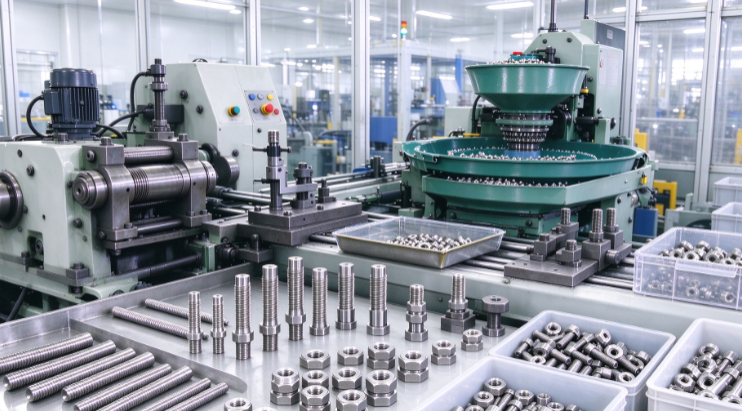
When a fastener fails, the part itself is often cheap. The shutdown, rework, field visit, or safety investigation is not. That is why buyers need a Fastener Manufacturer that treats thread quality, material control, and inspection records as one connected production job.
Zhongchun Machinery is the company name used for this article. The practical point for any buyer is simple: a bolt, screw, stud, or nut must fit the joint, carry the specified load, and arrive with evidence that the batch was made to the agreed requirement. Price matters, but repeatability decides whether the price was actually low.
Table of Contents
1. How a Fastener Becomes a Reliable Part
2. Material, Forming, and Finish Choices
3. Inspection That Tells the Truth
4. Procurement Checks Before a Purchase Order
5. A Practical Case: Designing Around Joint Behavior
7. Plan the Next Sourcing Conversation
How a Fastener Becomes a Reliable Part
Fastener production starts long before a heading machine forms a head. The drawing, thread system, property class, coating, and application load need to be clear first. A manufacturer then translates those requirements into steel grade, wire preparation, tooling, forming steps, heat treatment, finishing, and inspection.
The first control is incoming material. Heat number, chemical certificate, wire diameter, surface condition, and basic hardness should be matched to the purchase specification. If raw wire varies, later process adjustments only hide the problem. Good production records keep material identity connected to the finished lot.
Cold heading forms a large amount of geometry with little scrap. It is productive for repeat orders, but it needs suitable material ductility and carefully maintained dies. Machining is more flexible for prototypes and unusual geometries, yet it removes material and can create a different grain-flow pattern. A capable Fastener Manufacturer chooses the route by volume, shape, tolerance, and performance requirement rather than by habit.
Thread rolling deserves the same attention. Rolling displaces material to create a thread; cutting removes a strip of material. In many applications, rolled threads offer consistent profile control and a useful surface condition, but tooling and blank diameter must be right. The final call still depends on the drawing, material, and required class.
Material, Forming, and Finish Choices
Carbon and alloy steels cover a wide range of everyday mechanical fasteners. Stainless grades are useful where corrosion resistance or appearance matters, although their work-hardening behavior changes forming and galling risks. Zinc, nickel, phosphate, and other finishes can support corrosion protection or assembly needs, but coating thickness affects thread fit and torque behavior.
Buyers should not ask only, “Which material is strongest?” The better question is, “What combination of load, temperature, corrosion, installation method, and service life does the joint require?” A high-strength class with an unsuitable coating can perform worse than a lower class selected for the environment.
Production route | Best fit | Main advantage | Watch point |
Cold heading | Repeated bolts and screws with stable geometry | High output and low material waste | Die wear, cracks, and head fill need monitoring |
CNC machining | Prototypes, low volume, or complex shapes | Flexible geometry and quick design changes | More scrap and longer cycle time |
Thread rolling | High-volume external threads | Consistent profile and strong process repeatability | Blank size and tooling must match the thread |
Thread cutting | Low-volume or special thread work | Useful flexibility for non-standard requirements | Tool wear and interrupted grain flow require checks |
Zinc or other protective finish | General corrosion-control needs | Adds a practical protection layer | Thickness, hydrogen risk, and torque need validation |
Inspection That Tells the Truth
Dimensional inspection is not a formality. Major diameter, pitch diameter, thread gauge status, head height, bearing surface, length measurement, and concentricity can all affect assembly. Sampling plans should reflect the risk of the feature. A critical thread should not be checked only after a customer reports a fit problem.
Mechanical testing links the part to its property class. ISO 898-1 defines mechanical and physical properties for many metric carbon-steel and alloy-steel bolts, screws, and studs. It is a useful reference when specifying tensile strength, proof load, hardness, and related requirements. The standard is not a substitute for a complete drawing, but it gives engineering and purchasing teams a common language.
For aerospace work, the NASA Fastener Design Manual, NASA Reference Publication 1228 remains a practical engineering reference. It explains how preload, joint design, material, and installation affect fastener performance. This is an industry design reference, not a claim that Zhongchun Machinery supplied NASA. The lesson is broader: fastener selection cannot be separated from the joint around it.
Surface inspection, thread gauging, hardness checks, tensile tests, and coating verification should be tied to a lot number. When a buyer asks for a certificate of conformity, the document should point back to the actual batch, not a generic template. That traceability saves time when a customer needs targeted containment instead of a factory-wide stop.
Procurement Checks Before a Purchase Order
Send a complete drawing or a controlled specification. It should state thread standard, nominal size, length measurement method, head style, material, property class, finish, packaging, and inspection level. Photos help with orientation, but they cannot replace tolerances.
Ask the supplier to confirm these points in writing:
· Which process will form the head and thread?
· What material certificate and heat-lot traceability are supplied?
· Which dimensions are checked in-process and at final inspection?
· How are coating thickness, torque, and hydrogen-related risks handled where relevant?
· What is the sampling plan, and which tests are performed by an independent laboratory?
· How are nonconforming parts identified, segregated, and reported?
Sample approval should cover function, not just appearance. Assemble the fastener with the intended nut, washer, substrate, tool, and lubricant. Check fit, installation torque, prevailing torque if relevant, and clearance around the head. A polished sample can pass a visual review while still failing the real assembly.
A Practical Case: Designing Around Joint Behavior
Consider a maintenance contractor replacing bolted brackets on rotating equipment. The original drawing calls for a metric class, a zinc finish, and a defined tightening method. The contractor initially compares suppliers by unit price. During trial assembly, one batch reaches target torque before clamp load is consistent. The issue is not simply “bad bolts”; coating friction, lubrication, thread condition, and tightening method interact.
The corrective path follows the logic used in aerospace fastener guidance: define joint load, confirm fastener class, control surface condition, and verify installation method. The buyer then asks for a controlled coating specification, lot-based test records, and a short assembly trial. The result is a slightly higher part price but fewer unexplained torque readings and less rework.
This case illustrates why a Fastener Manufacturer should be evaluated on process evidence. A supplier that can explain how material, forming, heat treatment, finishing, and inspection connect is easier to qualify and manage when a drawing changes.
Frequently Asked Questions
What does a Fastener Manufacturer normally supply?
A manufacturer may produce bolts, screws, studs, nuts, washers, and custom threaded parts, depending on its equipment and approved processes. Confirm the actual product range, sizes, materials, finishes, and testing scope for the project rather than assuming every supplier covers every category.
Is thread rolling always better than thread cutting?
No. Rolling can be productive and repeatable for suitable external threads, while cutting may be practical for prototypes, small lots, or unusual geometry. Material behavior, blank diameter, tolerance, and application load decide the right method.
Which documents should accompany a production lot?
At minimum, request a certificate of conformity tied to the lot, material or heat certificate when specified, dimensional inspection results, and mechanical or coating test results required by the purchase order. Keep the drawing revision and lot number with the records.
How can a buyer reduce fastener quality risk?
Start with a controlled drawing, approve a functional sample, define critical characteristics, and agree on the inspection plan before production. Use a supplier that can show traceability and a clear nonconformance process, not only attractive samples.
Plan the Next Sourcing Conversation
The right Fastener Manufacturer brings manufacturing judgment to the drawing. Zhongchun Machinery can be approached with the part family, annual demand, material, property class, finish, inspection requirement, and delivery target so the quotation reflects the real job. Ask for a production route, sample plan, and documentation list before comparing line-item prices. That is the quickest way to turn a threaded component into a dependable part.
TDK
SEO Title: Fastener Manufacturer for Reliable Threaded Component Production
Meta Description: Choose a Fastener Manufacturer with controlled forming, thread quality, material traceability, and inspection records for dependable industrial sourcing.
Keywords: Fastener Manufacturer, custom fasteners, thread rolling supplier, cold heading fasteners, metric bolts, fastener quality control, threaded components, fastener traceability